
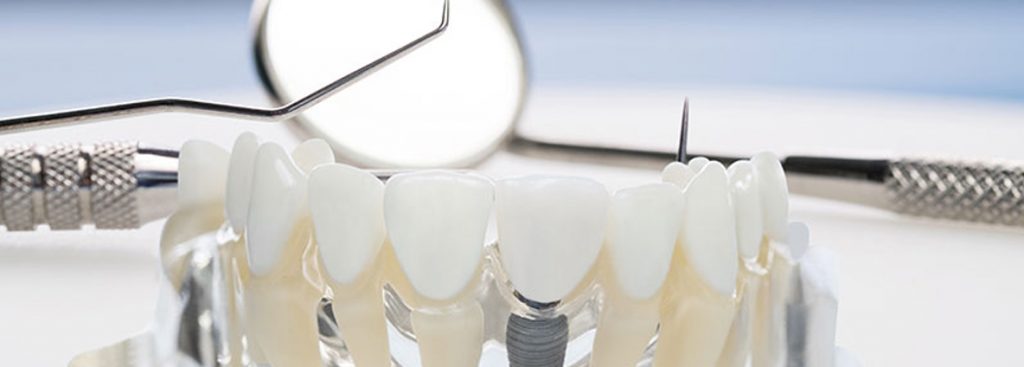
The dental practice Dr. Christiane Scheibe in Alcudia supports you as a competent, sensitive partner for your dental health. In addition to the comprehensive prophylaxis, diagnosis and treatment, you can take advantage of contemporary individual services of aesthetic dentistry, the prosthetic restoration and a child treatment tailored to our small patients.
Make an appointment by calling (+34) 971 548470. We take the time to advise you, develop a personalized treatment plan and prepare you for a pleasant stay in our office.
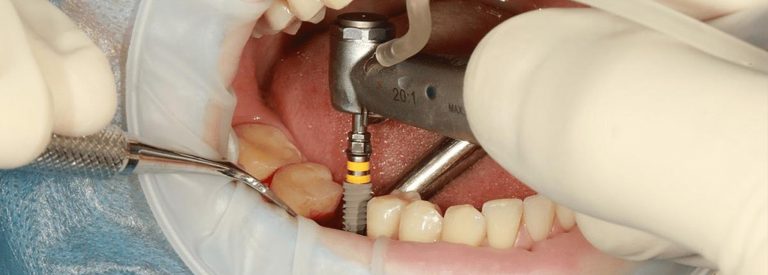
We exclusively use branded Implants made in Germany of Camlog. You will receive an implant card with all relevant implant data and certificates during and after the treatment. An implant is an artificial tooth root made of titanium that is planted in the jawbone. This is possible in both the upper and lower jaw. After a certain healing time, the implant can be loaded with different types of fixed or removable dentures.
More than 30 years of experience in implantology allows good forecasting and a long-term prospect of success. The prerequisite is an exact positioning of the implant in the jawbone after appropriate preliminary planning and good oral hygiene by the patient, which also includes regular prophylaxis.
At the Dental Clinic Dr.Christiane Scheibe we perform the following interventions:
+ Implants
+ Bone grafts
+ Sinus-Lift (maxillary sinus elevation for bone formation in the upper jaw)
+ Wisdom tooth removal
+ Complete range of oral surgery (cysts, abscesses, impacted teeth, apicectomy, etc.)
Orthodontics
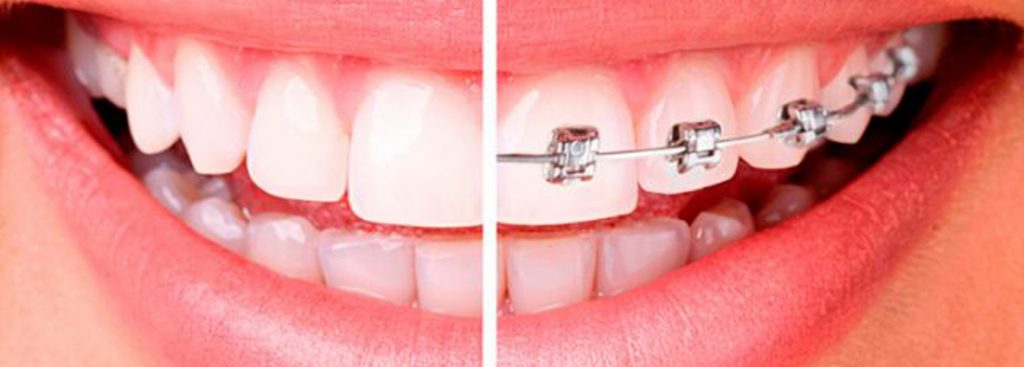
Orthodontics is much more than a solution to improve the aesthetics of our teeth.
When we refer to orthodontics, we are referring to a speciality of dentistry that is responsible for preventing and correcting the malposition of teeth. It is also responsible for correcting defects in the relationship between the maxillary bones in children, adolescents and adults.
TYPES OF TREATMENT
Preventive treatments
Preventive orthodontics is the part of orthodontics that tries to act before occlusal disharmonies appear. This is when there are direct causal agents that we can eliminate.
Some of the examples of appliances to be used are space maintainers or space recuperators. So are the extraction of supernumerary teeth and other actions that favour the correct eruption of permanent teeth. Our experience as dentists specialising in orthodontics makes us give vital importance to the prevention of malocclusions. Avoidance and prevention will always be better for the dental and general development of our children.
Interceptive treatments
This type of treatment is regularly used to correct harmful habits that can interfere with the correct growth of the face. Some malocclusions arise from deforming habits, such as thumb sucking or dummy use. Interceptive orthodontic treatments are aimed at correcting incipient alterations that can cause detrimental changes if measures are not taken in time. This is why a personalised diagnosis is very important, eliminating the cause and redirecting the normal course of development.
The patient and his or her parents must be guided to the best possible treatment opportunity. This will be done by a first specialist counselling visit at an early age, between 6 and 8 years.
Corrective treatment
Corrective orthodontic treatment may become necessary in cases that have not received interceptive or preventive treatment at an early age. It is also often performed in cases where a second phase is required to complete the programmed goals.
Corrective orthodontics for children and adolescents
For corrective treatments, mainly these types of appliances are used:
Firstly we have the functional braces.
There are also removable appliances (such as active plates or the Invisalign Teen system for adolescents).
Endodontics
What is endodontics?
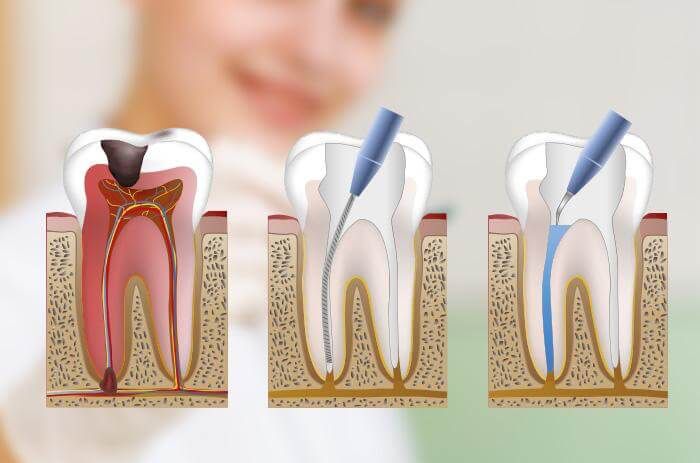
Endodontics, also called “root canal treatment or dental devitalisation”, consists of the removal of pulp tissue from the crown and root of the teeth.
It is a procedure that serves to preserve teeth that would otherwise be lost, allowing for subsequent reconstruction and rehabilitation.
At Dr. Scheibe’s Dental Clinic and her team, we believe that there is nothing better than the tooth itself and as extraction is an irreversible treatment, endodontics is the first treatment that should be considered.
The need for endodontics arises when irreversible lesions appear that compromise the vitality of the nerve.
In order to make an accurate diagnosis, a correct examination by a specialist is required, as well as an auxiliary X-ray to complement the analysis.
This treatment is painless and is always performed under local anaesthesia so that the patient does not feel any discomfort.
What symptoms are produced by a tooth that needs endodontics?
The symptoms can vary from minor momentary discomfort to prolonged and intense pain, with exposure to heat or cold, when chewing or biting. In some cases, pulp disease may not produce symptoms, so the patient should be aware that a tooth does not necessarily have to hurt to have its pulp affected.
What does a root canal consist of?
The procedure consists of eliminating the bacteria found in the affected canals in order to seal them and fill the crown.
We always advise you to carry out a follow-up to check that the treatment is progressing properly.
There are many cases where the tooth is badly destroyed and it is advisable to complete the procedure with the placement of a crown, which in addition to strengthening the tooth, will maintain its integrity in the long term.
Oral hygiene is fundamental after an endodoncy, so that the patient guarantees that the tooth will be preserved for a long time.
When there are dental infections that evolve untreated, they can spread to the tip of the root and form a phlegmon, an abscess, a granuloma or even a cyst; so we must remember that the key to prevent this from happening is to have regular dental check-ups and to start with prevention at all times.
Endodontic treatment is completely painless and although it is very laborious and more time-consuming than other dental treatments, it should never hurt. A proper anaesthetic technique will help to ensure that you do not feel any discomfort during the procedure.
Once the root canal has been completed, some discomfort may appear for a few days due to irritation of the tissues surrounding the root of the tooth. In these cases, appropriate medication would be required.
There are cases where it is necessary to redo a root canal, mainly due to bacterial contamination or fractures, and here we will have to control the conditions much more.
How many sessions are necessary?
In most cases, endodontics is carried out in a single session, although two or more sessions may be necessary depending on the condition of the tooth to be treated.
Are endodontic treatments successful?
Endodontic treatments have a success rate of over 95% and an endodontic treatment carried out judiciously and with commitment is a highly predictable treatment, with excellent results. It is a safe and effective method of saving teeth that would otherwise not be possible.
Come and consult us and we will help you maintain your smile.